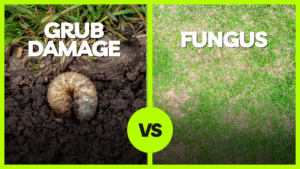
 Brown patches spreading across your lawn can be frustrating, especially when you are not sure what is causing them. Two of the most common culprits are lawn grub infestations and fungal lawn diseases.
At first glance, both problems can look similar. Grass turns brown. Turf thins out. Large areas begin to decline.
The problem is that grub damage and fungus require completely different treatments. Applying fungicide will not stop grubs from feeding on grass roots. Insect control will not cure a fungal infection attacking grass blades. Correct diagnosis is essential before any treatment begins.
This guide explains how to tell the difference between grub damage vs fungus step by step so you can make informed decisions and avoid wasting time and money.
Quick Takeaways
- Grub damage affects grass roots; fungus affects grass blades
- Turf that pulls up easily often indicates a lawn grub problem
- Circular or ring-shaped patches often suggest fungal disease
- Correct diagnosis prevents unnecessary insecticide or fungicide applications
What Is Grub Damage?
Grub damage occurs when beetle larvae, commonly referred to as lawn grubs, feed on the roots of turf-grass. During the larval stage, grubs feed hard under the soil and eat grass roots. They weaken the lawn from below.
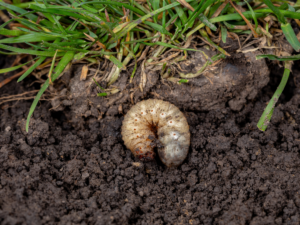 Because grubs feed on the root system, affected turf cannot absorb water or nutrients properly. The result is thinning grass, wilting during warm weather, and expanding brown patches.
Common signs of grub damage include:
- Turf that feels spongy underfoot
- Grass that pulls up easily like loose carpet
- Irregularly shaped brown areas
- Increased activity from birds, raccoons, or skunks eating grubs
Animals digging in your lawn is often a strong indicator that a grub infestation may be present.
What Is Lawn Fungus?
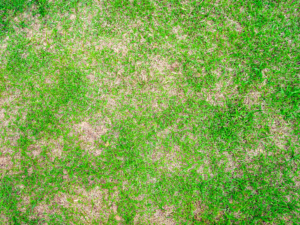 Lawn fungus refers to a range of fungal diseases that infect grass blades rather than roots. These diseases develop when conditions support fungal growth, especially in cool, wet weather. They are also common in spring and fall or during high humidity.
Unlike grub damage, fungal infections typically affect the visible portion of the grass. Symptoms may include circular patches, ring formations, discolored grass blades, and visible lesions on leaves.
Fungal lawn diseases weaken turf from the surface down, rather than destroying the grass roots.
Grub Damage vs Fungus: Key Differences at a Glance
Although both issues cause brown patches, their underlying damage patterns are different.
- Grass pulls up easily from the soil → Likely grub damage
- Grass remains rooted but shows leaf spotting or rings → Likely fungus
- Irregular patch shapes with root loss → Often grubs feed below the surface
- Circular or ring-shaped patches → Often fungal infection
- Animal digging present → Common with lawn grub activity
- Appears during extended moisture and high humidity → More consistent with fungus
These visual clues provide a strong starting point, but further inspection confirms the diagnosis.
Step-by-Step: How to Diagnose the Real Problem
Step 1: Perform the Tug Test
Gently grab a handful of affected turf and pull upward. If the grass lifts easily with little resistance, it may mean grubs are feeding on the roots below.
Healthy grass with fungal disease usually remains firmly anchored in the soil.
Step 2: Inspect the Roots and Soil
Peel back a small section of sod in the damaged area and inspect the soil. Look for white, C-shaped larvae in the top few inches of soil. These larvae represent the larval stage of beetles and are the active feeding form responsible for lawn grub damage.
Finding multiple grubs in a small area confirms active infestation.
Step 3: Examine Grass Blades
If roots appear intact, shift attention to the grass leaves. Look for lesions, spots, discolored edges, powdery coatings, or distinct ring formations. Fungal diseases typically show visible symptoms on the blades themselves rather than below the soil.
Grass blades infected with fungus may appear water-soaked, matted, or patterned in circles.
Step 4: Consider Seasonal Timing
Grub damage most often peaks in late summer and early fall when larvae are actively feeding on grass roots.
Fungal lawn diseases are more common in spring and fall. They also occur during long periods of high humidity and cool, wet weather.
Seasonal timing helps narrow down the likely cause.
Step 5: Evaluate Irrigation and Drainage
Overwatering and poor drainage create ideal conditions for fungal disease. If the lawn has been receiving frequent irrigation or has areas of standing moisture, fungus becomes more likely.
On the other hand, drought stress can exaggerate the appearance of grub damage because weakened roots struggle to support the turf.
Why Grub Damage and Fungus Are Often Confused
Both problems produce brown patches and thinning turf, which is why misdiagnosis is common. In some cases, lawns weakened by grubs become more vulnerable to disease, adding to the confusion.
However, the key difference stays the same. Grub damage starts below the soil surface, where grubs eat roots. Fungus affects the grass blades you can see above ground.
Understanding this difference prevents unnecessary or ineffective treatment.
What Happens If You Treat the Wrong Problem
Treating fungus when grubs are present allows root destruction to continue. Applying insecticide when the issue is fungal infection does nothing to stop disease spread.
Misdiagnosis wastes money and delays recovery. In severe cases, large areas of turf may require reseeding or resodding if the underlying issue remains unresolved.
 Accurate identification always comes first.
When to Call a Professional for Diagnosis
Professional evaluation is recommended when:
- Large areas of turf are affected
- Animals are digging across the lawn
- Previous treatments have failed
- You are unsure whether roots or blades are damaged
A trained professional can confirm if the issue involves grub feeding, a fungal infection, or both. They can also recommend the right course of action.
FAQ: Grub Damage vs Fungus
How do I know if my brown patches are grubs or fungus?
Perform a tug test and inspect the soil. If grass pulls up easily and larvae are present, it is likely grub damage. If roots are intact and blades show lesions or rings, fungus is more likely.
Does fungus cause grass to pull up easily?
No. Fungal disease typically affects grass blades, while root destruction and loose turf are signs of grub damage.
Can I have both grub damage and fungus at the same time?
Yes, although it is less common. Turf weakened by grubs may become more susceptible to fungal infection.
What time of year do grubs cause the most damage?
Grub damage is most noticeable in late summer and early fall during peak larval stage feeding.
What are the most common signs of grub damage?
Common signs of grub damage include spongy turf, grass pulling up easily, irregular brown patches, and animal digging from predators eating grubs.
Get Expert Lawn Diagnosis in Dallas, TX
 If your lawn is developing brown patches and you are unsure whether the cause is grub damage or fungus, professional evaluation provides clarity before treatment begins.
Lawn Sense offers expert lawn disease diagnosis and treatment in Dallas, TX and surrounding areas. We identify the root cause before recommending any solution—because Lawn Sense means no nonsense.
Schedule your professional lawn inspection today and get the right answer the first time.