Signs of an overwatered lawn include soggy soil, standing water, runoff, yellow grass, mushrooms, fungal disease, excessive thatch, shallow roots, and an increase in moisture-loving weeds. One symptom alone does not always mean overwatering. Check the soil and your irrigation schedule before reducing how much you water.
More water does not always mean healthier grass. Your lawn needs time to absorb water and for the soil to dry between watering cycles. Too much water can create soggy soil and other problems that make it harder for grass to stay healthy.
Quick Takeaways
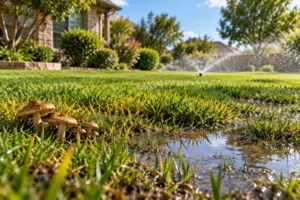 Soil that stays soggy between watering days is a major sign of overwatering.
- Puddles and runoff can mean water is being applied faster than the soil can absorb it.
- Too much moisture can contribute to fungus and other lawn problems.
- Yellow grass can result from both overwatering and underwatering.
- Irrigation problems can leave one part of your lawn soaked while another stays dry.
- Check the soil before changing how often or how long you water.
How Can You Tell If Your Lawn Is Overwatered?
You can often tell a lawn is overwatered by checking the soil and looking for signs of excess water. Soggy soil, puddles, runoff, yellow grass, mushrooms, fungal problems, and shallow roots are common clues.
One symptom doesn’t always mean you’ve overwatered your lawn. Look at several signs together. The condition of the soil is especially useful because both too much and too little water can cause grass to change color.
1. The Soil Stays Soggy
Soil that stays soggy between watering cycles is one of the clearest signs of too much water. Your lawn should have time to absorb water without the soil remaining saturated for long periods.
Don’t judge the lawn immediately after your sprinkler system finishes running. Wet soil is normal after watering your lawn. The concern is soil that stays soggy long after irrigation ends. It may still be saturated by the next watering day.
If the soil never gets a chance to drain, it may be time to reduce the amount of water or inspect your irrigation schedule.
2. Water Puddles in Your Yard
Puddles after irrigation can mean your lawn is receiving water faster than the soil can absorb it. Standing water is especially worth investigating when it happens every time your sprinkler system runs.
Too much irrigation isn’t the only possible cause. Compacted soil absorbs water more slowly. Poor drainage and low spots can also cause water to collect.
Watch the lawn while the sprinklers run. Where and when puddles form can help you figure out whether the problem is irrigation, drainage, or the soil itself.
3. Water Runs Off the Lawn
Water running onto sidewalks, driveways, or streets means the soil isn’t absorbing all the water being applied. Your sprinkler system may be putting down too much water at once.
Soil type and slope also matter. Heavy or compacted soil may absorb water slowly. Water can also move downhill before it has enough time to soak into a sloped lawn.
Long sprinkler run times can make runoff worse. In some yards, shorter watering cycles with soak periods between them can give the soil more time to absorb the water.
4. Your Grass Starts Turning Yellow
Yellow grass can be a sign of overwatering, but yellow grass alone does not prove your lawn is getting too much water. Underwatering and other lawn care problems can also cause grass to lose its green color.
Check the soil before changing your watering schedule. Yellow grass with wet or soggy soil points more toward excess water. Yellow or brown grass with very dry soil may need more water instead.
5. Mushrooms Start Appearing
Mushrooms can become more common when your lawn stays damp for long periods. Moisture and organic material create conditions where many fungi can grow.
A few mushrooms after heavy rain do not mean you have overwatered your lawn. Rainfall, humidity, soil conditions, and decaying organic material can all play a role.
Repeated mushrooms when the weather has been relatively dry are more useful as a clue. Check how often your sprinkler system runs and how long the soil stays wet afterward.
6. Your Lawn Develops Fungal Disease
Constant moisture can create conditions that favor some fungal lawn diseases. Frequent watering can keep the grass and soil wet longer than necessary.
Lawn disease can appear as discolored patches, thinning grass, spots on grass blades, or other changes in the turf. The exact symptoms depend on the disease and grass type.
Water isn’t the only cause of fungal disease. Temperature, humidity, grass health, and other lawn care practices matter too. However, a lawn that stays wet for long periods gives you a good reason to check your watering schedule.
7. Thatch Starts Building Up
A thick layer of thatch can be another reason to look at your watering and lawn care practices. Thatch is the layer of living and dead plant material between the green grass and the soil.
A small amount of thatch is normal. Excessive thatch can make it harder for water and air to move into the soil evenly.
Overwatering does not cause every thatch problem. Grass type, fertilization, mowing, soil conditions, and how quickly organic material breaks down can also affect thatch.
If your lawn has heavy thatch and stays wet for long periods, both issues are worth addressing.
8. Your Grass Develops Shallow Roots
Frequent shallow watering can encourage grass roots to stay near the soil surface. The roots have less reason to grow deeper when moisture is always available near the top of the soil.
Shallow roots can leave grass more vulnerable when hot or dry weather arrives. The upper layer of soil dries first, so shallow-rooted grass may show stress sooner.
The goal when watering your lawn is to get moisture into the root zone without leaving the soil constantly saturated.
9. Certain Weeds or Pests Become More Common
Constantly wet soil can create better conditions for some weeds and lawn pests. An increase in certain weeds or pests can be another clue that parts of your yard are staying too wet.
Weeds and pests alone do not prove your lawn is overwatered. Many other lawn conditions can attract pests or allow weeds to spread.
Look at the bigger picture. Weeds or pests combined with soggy soil, puddles, or runoff give you more reason to check the sprinkler system.
Overwatered vs. Underwatered Lawn: How Can You Tell?
Check the soil first when deciding whether a lawn is overwatered or underwatered. An overwatered lawn usually has soil that stays wet or soggy. An underwatered lawn usually has dry soil along with grass that wilts, curls, or becomes crispy.
Grass color isn’t enough to tell the difference. Yellowing and browning can occur when a lawn gets too much or too little water.
Checking the soil can keep you from making the problem worse. Adding more water to an already saturated lawn can cause more problems.
Why Is My Lawn Getting Too Much Water?
Your lawn may be getting too much water because the sprinkler system runs too long, waters too often, or applies water unevenly. Rainfall, drainage, and compacted soil can also leave the lawn wetter than expected.
Common causes include: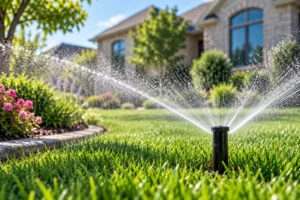
- Sprinkler zones running for too much time
- Too many watering days
- Watering soon after rainfall
- Poor sprinkler coverage
- Irrigation zones that contain areas with different watering needs
- Compacted soil that absorbs water slowly
- Poor drainage that allows water to collect
Uneven coverage can be especially tricky. A dry spot may cause you to increase the amount of time an entire sprinkler zone runs. The dry area may improve while another part of the same zone gets excess water.
How Do You Fix an Overwatered Lawn?
Fix an overwatered lawn by reducing irrigation, letting saturated soil dry, and finding out why the lawn received too much water. Don’t return to the same watering schedule until you know what caused the problem.
A simple troubleshooting process can help:
- Reduce or pause irrigation: Give saturated soil time to drain.
- Check the controller schedule: Review watering days and how long each zone runs.
- Account for recent rainfall: Your lawn may not need irrigation after wet weather.
- Watch for puddles and runoff: Check what happens while each sprinkler zone runs.
- Inspect sprinkler coverage: Look for areas receiving much more water than others.
- Check drainage and soil conditions: Irrigation may not be the only problem.
There is no single amount of time that works for every North Texas lawn. Grass type, soil, rainfall, season, sprinkler output, weather, and local watering rules can all affect when it’s time to water and how much water the lawn needs.
Can Your Irrigation System Cause Overwatering?
Yes. A poorly designed or incorrectly programmed irrigation system can give your lawn too much water. Uneven coverage can also leave some areas dry while other parts of the lawn become saturated.
Sprinkler heads and nozzles need to match the area they water. Irrigation zones should also group areas with similar watering needs when possible. Poor coverage can lead homeowners to increase run times just to reach a few dry spots.
Controller settings matter too. Long run times and too many watering days can keep the soil wet. Rain and weather sensors can also help a sprinkler system respond to changing conditions.
If your current setup cannot water the yard evenly, a properly designed irrigation system can provide better coverage and more control over the amount of water applied.
Better Coverage Makes Watering Easier
 A well-designed irrigation system should give your lawn even coverage without creating soggy areas, puddles, or unnecessary runoff. Better coverage makes it easier to water dry areas without soaking the rest of the yard.
Lawn Sense provides irrigation installation throughout the Dallas-Fort Worth area. We design irrigation systems around the lawn and landscape instead of simply adding more sprinkler heads.
If your current system struggles to water your yard evenly, contact Lawn Sense to learn more about our irrigation installation services.
Frequently Asked Questions
Can grass recover from overwatering?
Yes. Grass can often recover from overwatering if the turf and roots have not suffered serious damage. Reduce irrigation and give saturated soil time to dry. You may also need to fix drainage, sprinkler coverage, or lawn disease problems that developed while the soil stayed wet.
Does overwatering turn grass yellow?
Yes. Overwatering can contribute to yellow grass. Soil that stays saturated can create poor conditions around the roots and contribute to other lawn problems. Underwatering, disease, nutrient problems, and other issues can also turn grass yellow, so check the soil before changing your watering schedule.
How long does an overwatered lawn take to dry out?
There is no set amount of time for an overwatered lawn to dry. Soil type, drainage, temperature, sunlight, humidity, rainfall, and the amount of excess water all affect drying time. Heavy or compacted soil may stay wet longer than soil that drains well.
Should I stop watering if my lawn is soggy?
Yes. You should usually pause or reduce irrigation when the soil is already saturated. Adding more water to soggy soil can make the problem worse.
Give the lawn time to drain before watering again. Standing water that does not drain may point to a separate soil or drainage problem.
Can overwatering cause brown spots?
Yes, overwatering can contribute to conditions that cause brown or thinning patches. However, brown spots can also come from underwatering, lawn disease, insects, poor sprinkler coverage, or other problems. Check the soil and surrounding symptoms before assuming excess water is the cause.
Can too much water kill grass?
Yes. Prolonged overwatering can damage or kill grass. Soil that stays saturated can create poor growing conditions around the roots and contribute to lawn disease. How much damage occurs depends on the grass, soil, drainage, weather, and amount of excess water.