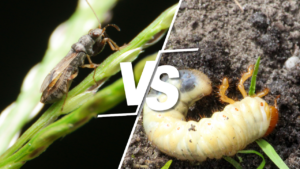
 Chinch bugs and grubs can both cause brown patches and dying grass, but they damage lawns in different ways. Chinch bugs feed above ground by sucking fluids from grass plants, while grubs live below the soil and feed on grass roots.
The fastest way to tell the difference is to inspect the roots. If the grass pulls up easily like loose carpet, grubs are likely responsible. If the roots remain anchored but the grass continues dying despite watering, chinch bugs may be the cause.
Many homeowners assume every patch of dead grass has the same cause. Unfortunately, that often leads to wasted time, unnecessary treatments, and continued lawn damage. Understanding the difference between chinch bugs and grubs is the first step toward restoring a healthy lawn.
Quick Takeaways
- Chinch bugs damage grass blades and stems above ground
- Grubs damage grass roots below ground
- Both pests can create brown patches and thinning turf
- Grass that lifts easily often points to grub damage
- Chinch bug damage frequently resembles drought stress
- Proper diagnosis helps prevent unnecessary treatments
Chinch Bugs vs Grubs at a Glance
While both pests can create similar-looking lawn problems, the location of the damage is very different. Chinch bugs attack the visible parts of the plant, while grubs attack the root system that keeps grass alive.
What Chinch Bug Damage Looks Like
Chinch bugs typically create symptoms that look similar to drought stress.
The first signs often include yellowing grass and wilting grass blades, even when the lawn receives adequate water. As feeding continues, small patches of damaged turf begin to expand.
Common signs of chinch bug damage include:
- Yellowing grass
- Brown patches that spread outward
- Wilting despite watering
- Damage near sidewalks, driveways, and sunny areas
- Turf decline during periods of extreme heat
Many homeowners increase irrigation when they see these symptoms. Unfortunately, extra watering does not stop chinch bugs because the insects continue feeding on the grass plants.
What Grub Damage Looks Like
Grubs create a completely different type of injury.
Instead of attacking grass blades, grubs feed on the roots beneath the soil surface. As roots disappear, grass loses its ability to absorb water and nutrients.
Common signs of grub damage include:
- Brown patches that enlarge over time
- Spongy or loose turf
- Grass separating from the soil
- Increased bird, raccoon, or armadillo activity
- Dead grass that pulls up easily
The root damage can become so severe that large sections of turf lift away from the soil with very little effort.
The Lawn Sense Lawn Lift Test
If you’re trying to determine which pest is causing damage, start with this simple Lawn Sense Lawn Lift Test.
Step 1: Grab a Handful of Grass
Find an area where healthy grass meets damaged turf.
Gently grab a handful of grass and pull upward.
Step 2: Check the Roots
Pay attention to how the grass responds.
If the turf lifts easily and separates from the soil, grubs are likely feeding on the root system.
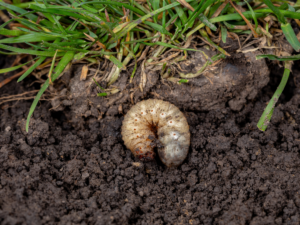
You may even find white, C-shaped larvae beneath the surface.
Step 3: Inspect the Surface
If the roots remain firmly attached, inspect the grass near the edge of the damaged area.
Chinch bugs are often found where healthy grass meets declining turf. Their feeding activity usually concentrates in these transition zones.
Why Dallas Lawns Are Vulnerable to Both Pests
 Several local conditions make Dallas-area lawns susceptible to both chinch bugs and grubs.
Summer temperatures frequently exceed 100 degrees, placing significant stress on turfgrass. Bermudagrass lawns may struggle during extended heat waves, especially when irrigation coverage is inconsistent.
Other contributing factors include:
- Drought stress
- Soil compaction
- Irrigation challenges
- Thick thatch accumulation
- General lawn stress
Stressed grass becomes more vulnerable to pest activity and often recovers more slowly after damage occurs.
Can You Have Chinch Bugs and Grubs at the Same Time?
Yes.
Although homeowners often assume a single problem is responsible for lawn decline, multiple issues can occur simultaneously.
A lawn may suffer from:
- Chinch bugs
- Grubs
- Heat stress
- Irrigation problems
- Lawn disease
- Soil compaction
When several factors overlap, accurate diagnosis becomes much more difficult.
This is one reason lawn care professionals often perform comprehensive inspections before recommending treatment plans.
How Professional Outdoor Pest Removal Helps
Professional insect control focuses on identifying the source of the damage before applying treatments.
Rather than guessing, lawn care professionals evaluate turf conditions, inspect affected areas, and determine which pests are present.
Professional outdoor pest removal may include:
- Accurate pest identification
- Detailed lawn inspections
- Targeted treatment plans
- Ongoing monitoring
- Prevention strategies
- Protection against recurring infestations
This approach helps avoid unnecessary treatments while improving long-term lawn health.
FAQ About Chinch Bugs and Grubs
Which pest causes more lawn damage?
Both pests can cause significant damage. Grubs often destroy roots, while chinch bugs weaken grass by feeding on plant fluids. The severity depends on infestation levels and overall lawn health.
How do I know if I have grubs or chinch bugs?
The easiest method is to inspect the roots. Grass that lifts easily often indicates grub damage. Grass that remains rooted but continues declining may indicate chinch bugs.
Can watering get rid of chinch bugs?
No. Watering alone will not eliminate chinch bugs. Their feeding activity continues even when grass receives adequate moisture.
What attracts grubs to a lawn?
Adult beetles lay eggs in lawns during the warmer months. Healthy turf, favorable soil conditions, and available moisture can create suitable environments for grub development.
When are chinch bugs and grubs most active?
Chinch bugs are generally most active during hot summer weather. Grub activity often becomes noticeable during late summer and early fall as larvae mature and feed more aggressively.
Get Answers Before Lawn Damage Gets Worse
 Brown patches, thinning grass, and turf decline can have multiple causes. Chinch bugs, grubs, irrigation problems, and lawn stress often produce similar symptoms. Guessing at the cause can lead to wasted time, unnecessary treatments, and more dead grass.
If you’re dealing with unexplained lawn damage, Lawn Sense can help identify what’s really happening beneath the surface. Our outdoor pest removal services help homeowners throughout Dallas and surrounding communities target chinch bugs, grubs, and other lawn-damaging pests before they cause extensive turf loss.
Schedule a professional lawn inspection today and get a clear answer before the damage spreads.