An underwatered lawn may develop curled grass blades, a dull blue-gray color, lingering footprints, dry soil, slow growth, brown patches, and thinning grass. Check the soil before adding more water because some symptoms, including yellow or brown grass, can also have other causes. Dry soil combined with several symptoms is a stronger sign of underwatering.
Catching water stress early gives you a chance to correct the problem before the lawn becomes severely dry or brown. Look at the grass, check the soil, and pay attention to how well your sprinkler system covers the yard.
Quick Takeaways
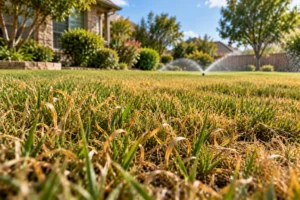 Curled or folded grass blades can be an early sign of water stress.
- Underwatered grass may turn dull green or blue-gray before turning brown.
- Footprints that stay visible can be an easy sign of drought stress.
- Dry soil is a better clue than grass color alone.
- Brown grass does not automatically mean your lawn needs more water.
- Uneven sprinkler coverage can leave dry areas even when the system runs regularly.
- Check both soil moisture and sprinkler coverage before increasing watering times.
How Can You Tell If Your Lawn Is Underwatered?
An underwatered lawn often has dry soil along with curled grass blades, a dull blue-gray color, lingering footprints, slow growth, or brown patches. The best way to diagnose a lack of water is to combine grass symptoms with soil moisture and sprinkler coverage instead of relying on color alone.
Start with the soil. If the soil below the grass is dry and several other signs of water stress are present, underwatering becomes a more likely cause.
1. Grass Blades Start Curling or Folding
Curling or folding grass blades can be an early sign that your lawn needs water. Grass may change the shape of its blades as water stress develops.
This symptom can appear before the lawn turns brown. That makes curled or folded blades useful for spotting a lack of water early.
Check several areas of the yard. If curling is limited to one section, poor sprinkler coverage may be causing a localized dry spot rather than the entire lawn being underwatered.
2. Your Lawn Turns Dull Green or Blue-Gray
A dull green or blue-gray color can be an early sign of an underwatered lawn. Grass may lose its normal bright green appearance before more obvious yellowing or browning begins.
The progression can look something like this:
Healthy green → dull or blue-gray → yellow or brown as stress gets worse
Color alone is not enough to diagnose the problem. Check the soil for dryness and look for other signs your lawn needs water before increasing irrigation.
3. Footprints Stay Visible in the Grass
Footprints that remain visible after you walk across the lawn can indicate water stress. Healthy, hydrated grass blades are usually better able to spring back after being stepped on.
Underwatered grass loses some of that ability. Footprints, mower tracks, or other flattened areas may remain visible longer than usual.
The footprint test is simple, but it should not be your only test. Pair it with a soil check to get a better idea of whether the lawn is actually dry.
4. The Soil Feels Dry and Hard
Dry, hard soil is one of the strongest clues that your lawn isn’t getting enough water. Check below the grass instead of judging moisture from the appearance of the lawn alone.
A simple screwdriver test can help. Push a screwdriver into the soil in several parts of the yard. Moist soil is generally easier to penetrate, while very dry or compacted soil can be harder to push through.
The test isn’t perfect because compacted soil can also be hard even when moisture is present. Digging slightly below the surface gives you a better look at actual soil moisture.
If the soil is consistently dry around the grass roots, your lawn may need more water or better irrigation coverage.
5. Your Grass Grows More Slowly
Grass growth can slow when the lawn doesn’t have enough water. During drought or heat stress, grass may reduce growth as it responds to difficult conditions.
Slower growth doesn’t always mean you need to water deeply or increase your irrigation schedule. Seasonal dormancy can also slow or stop grass growth.
Look at the soil, grass color, and other symptoms before deciding that a lack of water is responsible.
6. Yellow or Brown Patches Appear
Yellow or brown patches can develop when grass goes without enough water for too long. However, discoloration alone does not prove that a lawn is underwatered.
Brown or yellow grass can have several causes. Lawn disease, dormancy, insects, poor sprinkler coverage, and too much water can all change the appearance of turf.
Check the soil in the discolored area. Dry soil combined with curled blades, lingering footprints, and other drought symptoms makes underwatering more likely.
If the soil is wet or soggy instead, compare what you’re seeing with the signs your lawn is overwatered before adding more water.
7. Your Lawn Starts Thinning Out
Prolonged water stress can cause grass to lose density and leave thin or bare areas. Severe drought stress can eventually damage turf if the grass does not get the moisture it needs.
Thin grass alone does not prove underwatering. Shade, insects, disease, soil problems, heavy traffic, and other lawn care issues can also cause turf to thin.
Check the soil beneath thin areas. You should also watch your sprinkler system while it runs. A thin area that stays noticeably drier than the surrounding lawn may have an irrigation coverage problem.
Is Your Lawn Underwatered or Just Dormant?
Brown grass can be underwatered, dormant, or affected by another lawn problem. Dormancy is a survival response that allows some grasses to reduce growth during stressful seasonal conditions.
Dormant grass may turn brown and stop growing even though the grass is still alive. Grass type, temperature, season, and weather all help determine whether dormancy is likely.
Don’t assume every brown lawn needs more irrigation. Check soil moisture and consider the time of year before making a major change to your watering schedule.
Why Is My Lawn Underwatered Even Though My Sprinklers Run?
A lawn can still lack water even if the sprinklers run often. This is because sprinklers do not always cover the whole lawn evenly. Some areas may receive plenty of water while other sections remain dry.
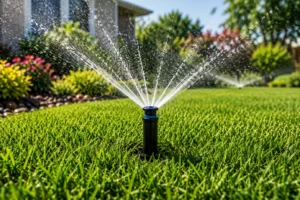 Common irrigation problems include:
- Sprinkler heads that don’t provide even coverage
- Blocked or poorly positioned sprinkler heads
- Irrigation zones that don’t match the needs of the landscape
- Controller run times that are too short
- Water that doesn’t reach the grass root zone
- Hot, sunny, or exposed areas that dry faster
- Soil conditions that affect how water moves through the ground
Watch your sprinkler system while it runs. Look for areas that receive little spray compared with the rest of the zone.
Checking the soil in both wet and dry areas can also tell you more. If one section is consistently dry while nearby grass gets enough water, irrigation coverage may be the real problem.
How Do You Fix an Underwatered Lawn?
Fix an underwatered lawn by confirming the soil is dry, checking sprinkler coverage, and correcting the reason the grass isn’t getting enough water. Simply running the entire sprinkler system longer can create new problems if only part of the yard is dry.
A good troubleshooting process is:
- Check soil moisture. Confirm that the grass root zone is actually dry.
- Inspect sprinkler coverage. Watch each zone and look for areas receiving little water.
- Check the controller. Review watering days and sprinkler run times.
- Consider recent weather. Heat, rainfall, and seasonal conditions affect how quickly soil dries.
- Adjust watering as needed. The right schedule depends on the lawn, soil, weather, and irrigation system.
- Correct coverage problems. Fix irrigation issues when certain areas remain dry.
The goal is not simply to water more often. Your irrigation system should provide enough moisture to the root zone without soaking other parts of the lawn.
Can Poor Irrigation Coverage Cause Dry Spots?
Yes. Poor irrigation coverage can leave dry spots even when the sprinkler system runs on schedule. Sprinkler spacing, blocked spray patterns, mismatched heads or nozzles, water pressure, and irrigation zone design can all affect where the water lands.
A sprinkler head may also be blocked by grass, plants, fences, or other objects. Poorly positioned heads can leave gaps between spray patterns.
Don’t keep watering the entire lawn longer just to compensate for one dry area. That approach can leave one section underwatered while another becomes overwatered.
The better solution is to identify why water isn’t reaching the dry area. Correct sprinkler coverage can help the lawn receive water more evenly and make it easier to water deeply without wasting water.
Give Every Part of Your Lawn the Water It Needs
 A properly designed irrigation system should deliver even coverage across your lawn without leaving some areas dry and others soaked. Good coverage makes it easier to give the grass enough water without overwatering the rest of the yard.
Lawn Sense provides irrigation installation throughout the Dallas-Fort Worth area. We design irrigation systems around the needs of your lawn and landscape, with an emphasis on even and efficient coverage.
If dry spots and uneven watering are constant problems, contact Lawn Sense to learn more about our irrigation installation services.
Frequently Asked Questions
What does grass look like when it needs water?
Grass that needs water may develop curled or folded blades, a dull green or blue-gray color, lingering footprints, slow growth, or yellow and brown areas. Check the soil too. Dry soil combined with several grass symptoms is a stronger sign of underwatering than grass color alone.
How can I test if my lawn needs water?
Check the soil below the grass to see whether it is dry. You can also try pushing a screwdriver into the soil. Very dry soil may be harder to penetrate. Look for other signs such as curled blades, a dull color, and footprints that remain visible.
Will an underwatered lawn turn brown?
Yes. An underwatered lawn can turn yellow or brown as water stress becomes more severe. Brown grass can also result from dormancy, disease, insects, overwatering, and other problems. Check soil moisture before assuming that brown grass needs more irrigation.
Can an underwatered lawn recover?
An underwatered lawn can often recover if the grass is still alive and the cause of the water stress is corrected. Recovery depends on the grass type, severity and length of the drought stress, weather, soil conditions, and overall lawn health.
Why is my grass dry even though my sprinklers are running?
Grass can stay dry when sprinkler coverage is uneven. Blocked heads, poor sprinkler spacing, low water pressure, incorrect nozzles, short run times, and poor irrigation zone design can prevent water from reaching certain areas. Watch the sprinkler system run and compare soil moisture across the zone.
How can I tell if brown grass is dead or dormant?
Brown grass is not necessarily dead. Some grasses enter dormancy during stressful seasonal conditions and may stop growing or turn brown while remaining alive. Grass type, season, weather, soil moisture, and whether the grass responds when favorable growing conditions return can help distinguish dormancy from serious turf damage.
Can you overwater a lawn trying to fix dry spots?
Yes. Running an entire sprinkler zone longer to fix one dry spot can overwater areas that already receive enough moisture. Check sprinkler coverage first. Fixing blocked heads, poor spacing, pressure problems, or other coverage issues can deliver more water to the dry area without soaking the rest of the lawn.